




June 25, 2026

Key Points
• Formal authority and earned authority are not the same thing. You can have the title and still find your leadership treated as conditional, and that distinction matters for how you build your strategy.
• Black women are promoted at a rate of just 60 per 100 men, and 80% of senior-level Black women report experiencing burnout while worrying about job security. This is not a performance problem. It is a systemic one.
• Prove-it-again bias means some people in your organization will require you to re-establish your authority in every new room, every new initiative, and every new quarter. Building a strategic antidote is non-negotiable.
• The relational infrastructure of your leadership, including sponsorship, cross-functional credibility, and trust built before you need it, is what makes your authority durable over time.
• Unshakeable authority is not about being louder, harder, or more aggressive. It is about being so consistently clear, credible, and strategically visible that your leadership becomes impossible to ignore.
You earned the seat. You have the title, the track record, and a body of work that speaks for itself. But you have also noticed: some people in this organization still treat your authority as conditional, optional, or subject to ongoing verification.
A new stakeholder joins a meeting and has to be introduced to your expertise as if you have not been in this role for three years. Your recommendation gets questioned with a rigor that your peers’ recommendations do not receive. You are asked to explain your thinking in situations where that explanation is simply not required of others.
This is not a reflection of your capability. This is what the research calls the double bind and the prove-it-again bias, and it falls disproportionately on Black women in senior authority building spaces. This blog names the dynamic, validates the experience, and gives you a strategy for building authority that is durable, grounded, and built to last.
Your next read: Executive Coaching for Black Women – How to Lead with Authority, Confidence, and Emotional Well-Being
What Is Unshakeable Authority, and Why Is It Harder to Build for Black Women Leaders?
The Difference Between Formal Power and Earned Authority
Formal power is the authority that comes with a title. It exists on an org chart. Earned authority is the kind of influence that operates independent of the chart: the credibility, expertise, and relational trust that make people follow your direction even when they do not have to.
The challenge for Black women in senior roles is that formal power is frequently granted without the accompanying credibility infrastructure to make it stick. You may be the most senior leader in the room and still find your authority informally contested by people who would not contest the same authority if it came from someone who looked different.
Research highlighted in Brainz Magazine’s 2025 leadership analysis confirms that Black women face a documented double bind: navigating racial and gender bias simultaneously, with only 1% of C-suite positions currently held by Black women, despite Black women representing 7% of the workforce.
What the Research Says About Authority and Black Women Leaders
According to McKinsey’s 2025 Women in the Workplace study, as reported by AFRO American Newspapers, Black women are promoted at a rate of just 60 per 100 men. Additionally, 80% of senior-level Black women report experiencing burnout while simultaneously worrying about job security. These two dynamics, underpromotion and precarity, create a leadership environment where building authority requires not just excellence, but strategic, proactive positioning.
Navigating workplace isolation as a Black woman executive is one of the compounding factors that makes authority-building harder. When you are the only one or one of very few, the networks through which authority is typically confirmed are not naturally accessible.

Why Does Being the Most Senior Black Woman in the Room Come With Unique Pressure?
The Isolation Tax at the Top
When you are the most senior Black woman in your organization or on your leadership team, you carry more than your formal job description. You are often the unofficial cultural interpreter, the unspoken representative, and the person whose every decision is scrutinized in ways that your colleagues do not experience.
This is sometimes called the isolation tax: the additional cognitive and emotional labor that comes with being a highly visible minority in a senior space. The hidden cost of being the strong one at work is real, and for Black women at the top, it is one of the most significant ongoing drains on leadership energy and perceived authority.
Navigating Organizational Politics That Were Not Built for You
Organizational politics at the senior level operate through informal networks, inside conversations, and relationship capital often built through shared social and cultural contexts. When you have not been included in those networks historically, building political capital requires explicit strategy.
Research from Nonprofit Quarterly’s 2025 analysis of Black women in leadership confirms that for Black women leading in any sector, leadership carries both mission and legacy, and the personal cost of navigating systems not designed for their presence can be profound. How to navigate organizational politics with confidence at the executive level is a strategic skill set that deserves the same intentionality as any other leadership capability.
Related: Secrets to Navigate Office Politics with Confidence
How Do You Build Authority That Doesn’t Require Constant Proof?
Owning Your Expertise Without Over-Explaining
One of the most common patterns among senior Black women navigating prove-it-again bias is over-explanation: providing more context, more evidence, and more qualification than the situation requires, as a preemptive defense against being questioned. This pattern, while understandable, often produces the opposite effect. Over-explanation signals uncertainty. Precision signals authority.
Build the practice of making your recommendations clearly and then stopping. “Here is my recommendation, and here is the critical reasoning behind it” is a complete contribution. You do not need to hedge your expertise, explain your credentials, or apologize for the knowledge you are about to share.
You can also examine whether signs you are still leading from survival mode instead of authority are showing up in how you present your ideas. Authority is a posture before it is a title.
The Strategic Relationships That Anchor Your Power
Research from CEO-NA and Harvard Business Review on sponsorship and Black women in the C-suite confirms that sponsorship is the single most powerful mechanism for advancing Black women’s careers at the executive level. A sponsor is a senior leader who advocates for you in rooms you cannot enter, who puts their organizational credibility behind your advancement.
Building this kind of relationship infrastructure is one of the most important investments you can make in the durability of your authority. It requires intentional relationship-building with senior leaders before you need something from them, and demonstrating your strategic value in settings where decision-makers are watching.
How Do You Navigate Organizational Politics Without Compromising Your Values?
Playing the Long Game Without Losing Yourself
One of the most common pieces of advice given to Black women navigating organizational politics is to “play the game.” But the game as it has historically been designed was not built with Black women’s advancement in mind. Playing it uncritically often means absorbing costs that others do not pay.
The reframe that serves most effectively is this: you are not playing someone else’s game. You are building your own power base, on your terms, with your values intact. That means choosing which battles to engage, building alliances with people who see your leadership clearly, and creating visible results that speak more loudly than any political maneuvering ever could.
How to avoid the glass cliff that traps senior women leaders is a critical part of this navigation. Not every high-visibility opportunity is an advancement opportunity. Some are setups.
When to Push Back and When to Strategically Reposition
There will be moments when your authority is challenged in ways that require a direct response. And there will be moments when the most powerful choice is to reposition rather than confront. Learning to distinguish between the two is one of the most important leadership skills you can develop.
A direct challenge to your expertise in front of stakeholders who are evaluating your leadership deserves a direct, confident response. A pattern of organizational resistance that runs deeper than any single incident deserves a strategic reassessment, including potentially broadening your options externally.
What Does Durable Authority Look Like in Practice?
Leading Authentically in Spaces That Were Not Built for You
Durable authority is not about assimilation. It is about being so consistently, visibly competent and strategically credible that there is no room for the organization to maintain a fiction about your capability.
As one of my clients shared after our coaching work together: “I had certifications and skills I wasn’t using because I didn’t believe they could translate into a business. Through coaching, I realized I had everything I needed.” Authority begins with the clarity that what you already carry is enough.
Protecting Your Authority When It Gets Tested
Your authority will get tested. That is not a prediction about you specifically. It is a statistical certainty for Black women at the senior level. What matters is how you prepare for those tests before they arrive.
Build your evidence file. Cultivate your sponsors. Stay visible in the settings where decisions happen. And do your inner work consistently, because the most durable authority is the kind that does not require anyone else’s validation to feel real.
Your Authority Is Not Conditional. Let’s Make Sure Your Organization Knows That.

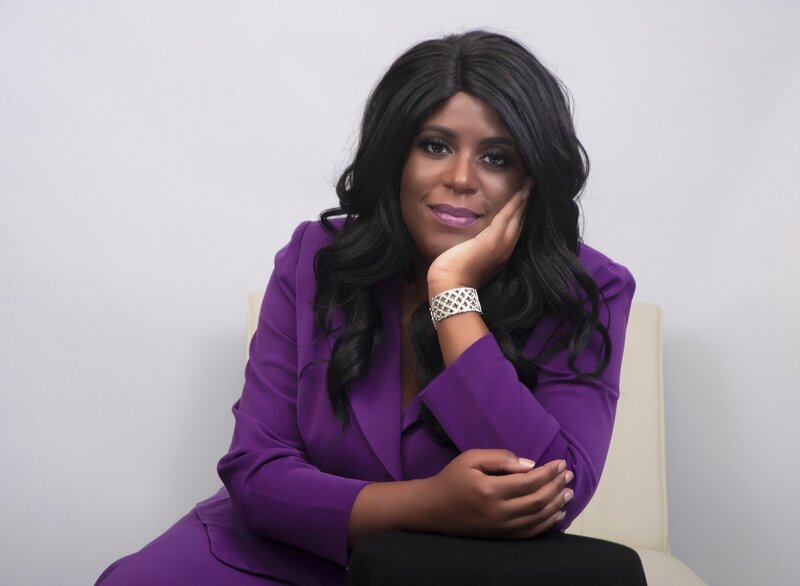
(Image created by Author using Sintra)
Your authority was not given to you. You built it, through years of exceptional performance, strategic leadership, and showing up in rooms that were not always ready to receive you.
The goal now is not to prove it again. The goal is to position it so strategically, so visibly, and so consistently that it becomes impossible for this organization, or any organization, to overlook.
If you are ready to build the kind of authority that sustains and expands over time, my V.I.P. Lead With E.A.S.E.™ executive coaching program was designed for the senior Black women who are done proving themselves and ready to lead from a position of secure, grounded power. The V.I.P. Roadmap Session is where your strategy begins. Schedule your session today!
Your authority is not conditional. Let’s make sure your organization knows that.
Also read: Executive Coaching for Black Women. Empowering Unstoppable Success

About Dr. T
I know what it feels like to stumble through a career transition. I flubbed my first move from the military so badly it took me over a decade to rebuild my confidence. That experience fuels my mission today.
I’m Dr. T, Certified Executive Coach, ICF PCC. I help Black women executives secure bigger bonuses, increase their visibility, and finally create the space to enjoy the life they’ve worked so hard for.
I understand the weight of imposter syndrome and the pressure to constantly prove yourself at the top. My signature Lead with E.A.S.E.™ coaching framework equips leaders with the tools, strategies, and inner authority to navigate career challenges with clarity, confidence, and executive presence.
✨ Ready to shift from overworked to unstoppable? Let’s talk.
Curated Reading List
- 📚”Melaninated Magic: 180 Affirmations to Nurture Your Soul and Unleash Your Black Girl Joy ” by Twanna Carter, PhD
- 📚”Burnout: The Secret to Unlocking the Stress Cycle” by Emily Nagoski, PhD
- 📚”I’m Not Yelling: A Black Woman’s Guide to Navigating the Workplace (Successful Black Business Women)” by Elizabeth Leiba.
- 📚“Corporate Blues: The Untold Stories of Women in Toxic Workspaces Anthology” by Dr Carey Yazeed featuring Dr. Twanna Carter, et. al.
- 📚”Crucial Conversations: Tools for Talking When Stakes Are High” by Kerry Patterson, Joseph Grenny, Ron McMillan, and Al Switzler.
- 📚”Influence: The Psychology of Persuasion” by Robert B. Cialdini.
- 📚”How to Win Friends and Influence People” by Dale Carnegie.
- 📚”Lean In: Women, Work, and the Will to Lead” by Sheryl Sandberg.
- 📚”Dare to Lead” by Brene Brown.
- 📚”The Memo” by Minda Harts.
- 📚“Atomic Habits: An Easy & Proven Way to Build Good Habits & Break Bad Ones” by James Clear
- 📚”Worthy: How to Believe You Are Enough and Transform Your Life” by Jamie Kern Lima
- 📚“Be Who You Are to Get What You Want: A New Way to Negotiate for Anyone Who’s Ever Been Underestimated”, by Damali Peterman
- 📚Unbreak My Soul: How Black Women Can Begin To Heal From Workplace Trauma by Carey Yazeed, PhD
- 📚 Becoming A Great Leader: The Actionable Guide for Becoming An Outstanding Leader by Dr. Francesca Abii
- 📚Work Shouldn’t Hurt: How Great Leaders Create Psychologically Safe Workplaces by Rochelle Ramathe
Read my latest blogs…
- Servant Leadership Behaviors: 10 Actions Employees Can See and Trust
 Over the past four posts, we have taken servant leadership apart piece by piece. It is not pizza. It requires courage that costs leaders… Read more: Servant Leadership Behaviors: 10 Actions Employees Can See and Trust
 - Servant Leadership Courage: Will You Protect Your People at a Cost?“My door is always open.” Almost every leader has said it, and most mean it. Yet the true measure of that promise is not… Read more: Servant Leadership Courage: Will You Protect Your People at a Cost?
- Servant Leadership vs Employee Perks: Why Pizza Cannot Fix Toxic WorkKey Points: The email arrives on a Tuesday. “Lunch is on us Friday! Thank you for all your hard work.” That same week, two… Read more: Servant Leadership vs Employee Perks: Why Pizza Cannot Fix Toxic Work
- Perfectionism at Work: The Standard That Is Draining YouKey Points You reread the email one more time before sending. You revise the deck that was already strong. You hold back the idea… Read more: Perfectionism at Work: The Standard That Is Draining You
- Executive Time Management Is Not a Scheduling FixWhat you’ll take away You have tried the apps. The color-coded calendar. The time-blocking system a productivity guru swore would change your life. You… Read more: Executive Time Management Is Not a Scheduling Fix
- Delegation for Leaders: Why Letting Go Feels UnsafeKey Points: You know you should delegate. You have read the articles. You understand, intellectually, that holding everything yourself is unsustainable and that your… Read more: Delegation for Leaders: Why Letting Go Feels Unsafe
- Over-Functioning: You Were Never Meant to Carry It AllKey Points: You are the one who catches what everyone else misses. You revise the deck nobody asked you to touch. You answer the… Read more: Over-Functioning: You Were Never Meant to Carry It All
- Executive Coaching That Actually Fits Black Women NowKey Points: You have likely encountered plenty of leadership advice. The books, the workshops, the well-meaning mentors telling you to lean in, speak up,… Read more: Executive Coaching That Actually Fits Black Women Now






+ show Comments
- Hide Comments
add a comment