




April 10, 2026

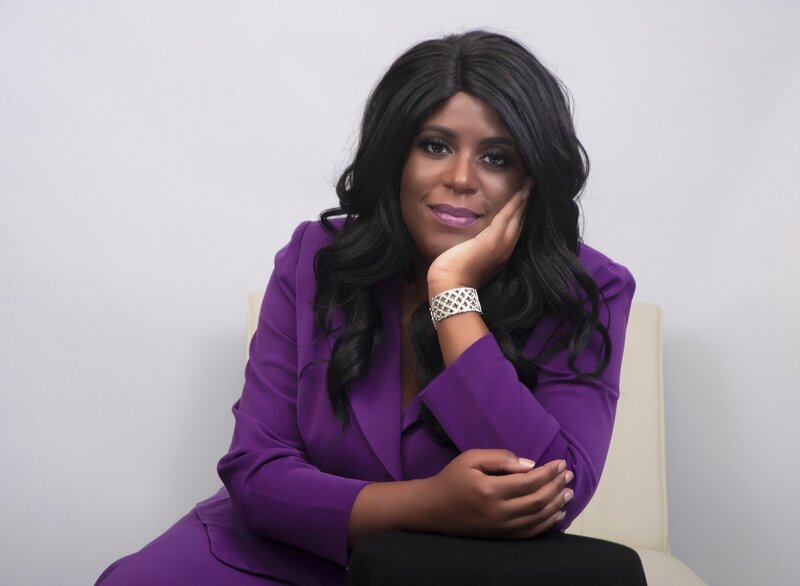
Image created by Author using Sintra*
In this post, you will learn:
- Why your LinkedIn profile may be misrepresenting your actual leadership level
- How to shift from task-based language to architect-level executive language
- What the four profile sections recruiters and sponsors look at first
- How to use proof points in your executive LinkedIn strategy to establish authority, not just credentials
- What decision-makers should immediately understand when they land on your profile
You have spent years delivering results. Leading teams. Navigating rooms where your contributions were overlooked while your workload expanded. You have solved problems no one else wanted to touch, built departments from scratch, and guided organizations through some of their most complex seasons.
And yet, if a recruiter or sponsor landed on your LinkedIn profile today, would it reflect who you actually are?
For many Black women in senior and executive roles, LinkedIn is the missing link between their real-world impact and the bigger opportunities they are ready for. The profile reads like a job description. Not a leadership legacy. And in a landscape where executive presence coaching for Black women is specifically designed to close that gap, your digital presence matters more than ever.
This post gives you a strategic framework for transforming your LinkedIn into an executive brand platform. One that signals authority, attracts the right stakeholders, and converts profile traffic into real opportunity.
Why LinkedIn Is Now an Executive Brand Platform, Not a Digital Resume
What Recruiters and Decision-Makers See in the First 8 Seconds
LinkedIn is no longer a place to park your resume. Research on professional visibility confirms that LinkedIn profiles are now living, breathing brand assets. Recruiters, board members, sponsors, and hiring managers do not simply skim profiles. They pattern-match. They are looking for signals of strategic authority, not just career history.
Studies show that 95% of recruiters regularly use LinkedIn to find and vet candidates. And complete, optimized profiles increase interview opportunities by as much as 71%. What that tells you is this: the quality of your profile is not a nice-to-have. It is the front door to your next leadership opportunity.
How the Visibility Gap Affects Black Women in Particular
The stakes for getting this right are higher for you. According to the McKinsey Women in the Workplace 2024 report, women of color represent only 7% of C-suite positions. The broken rung hits Black women hardest, with only 54 Black women promoted to manager for every 100 men. And the 2025 data confirms that women of color hold just 9% of senior manager and director roles.
This is not about your qualifications. You are already exceptional. It is about the visibility strategies that make your leadership legible to the people with the power to open doors. When your LinkedIn profile does not reflect your executive authority, it compounds an already inequitable system.
Does Your LinkedIn Headline Reflect Your Executive Authority?
The Difference Between a Title and a Value Statement
Your headline is one of the first things a recruiter reads. Most Black women in senior roles default to something like “Senior Director at XYZ Organization” or “VP of Operations | Healthcare Industry.” That is a title. Titles tell people where you work. They do not tell people what you lead, what you build, or what you make possible.
An executive headline communicates your value, your domain of authority, and the type of organization or challenge you are built for. It positions you as a solution, not a credential.
Before you update anything else on your profile, run a LinkedIn audit designed for your next senior-level pivot to get clear on exactly where your current profile is losing decision-makers.
Formula for Writing an Executive Headline That Commands Attention
A strong executive headline for a senior pivot follows this structure:
What You Lead + Who You Serve + The Outcome You Drive
Example: “Executive Leader Transforming Healthcare Operations for High-Complexity Systems | P&L Accountability | Organizational Change”
That headline tells a story in one line. It communicates scope, context, and impact. And it signals exactly what recruiters, sponsors, and decision-makers need to see to know you belong in the room.

Image created by Author using Sintra*
Your About Section Is Either Winning Rooms or Losing Them
What Executive About Sections Must Communicate
Your About section is your leadership narrative in long form. It is where you tell people not just what you have done, but how you think, what you believe about leadership, and where you are going next.
Research on professional storytelling confirms that narrative-driven content drives significantly more engagement than purely informational content. That principle applies directly to your About section. People remember leadership stories. They do not remember bulleted task lists.
Avoid the branding mistakes that quietly sabotage Black women leaders by writing an About section that opens with a powerful, present-tense statement about who you are and what you stand for as a leader. Then paint a picture of the impact you have created. Close with a forward-looking statement about where you are headed and what kind of opportunity you are ready for.
The Narrative Shift: From Career History to Leadership Vision
Your About section is not a summary of your resume. It is a vision statement anchored in your track record. The question it should answer is not “What have you done?” It should answer: “Why does the work you lead matter, and what are you building toward?”
Write it in first person. Make it warm and authoritative. And make sure a recruiter who reads it can immediately answer three questions: What does this leader do? What have they built or transformed? What are they ready for next?
How to Stop Using “I Managed” Language and Start Using Executive Language
The Language of Architects vs. the Language of Task Managers
This is one of the most consequential shifts you can make across your entire profile.
Task-based language describes what you did. Executive language describes what you built, shaped, or transformed. Here is what that looks like in practice:
| Task Language | Executive Language |
| I managed a team of 12 | I architected a cross-functional team strategy that… |
| I oversaw the budget | I directed a $4M portfolio and restructured spending to… |
| I coordinated projects | I designed and launched an enterprise initiative that… |
| I worked with stakeholders | I cultivated C-suite relationships that accelerated… |
| I implemented programs | I engineered a culture shift that resulted in… |
What Is the Difference Between Task Language and Executive Language on LinkedIn?
Task language focuses on your activity. Executive language focuses on your authority, judgment, and impact.
Recruiters and decision-makers scanning senior leadership profiles are not looking for someone who completed tasks. They are looking for someone who shaped outcomes. Every bullet point in your experience section should answer the question: “What did I architect, design, build, or transform?” not simply “What did I do?”
This shift is not about inflating your experience. It is about accurately representing the leadership you have already been exercising. You have not just managed. You have architected. Now your profile needs to say so.
The Featured Section and Proof Points That Signal Executive Readiness
What to Place in Your Featured Section During a Career Pivot
The Featured section is the most underused real estate on LinkedIn, especially during a pivot. This is where you curate the narrative. Instead of letting the algorithm surface random posts, you decide what a recruiter sees first when they want to know more about you.
During a pivot into a bigger role, your Featured section should include at minimum: a leadership statement or personal brand video, a published article or speaking feature if available, a compelling post that demonstrates executive thought leadership, and any media coverage, awards, or panel appearances that signal industry authority. Pair this with the work you have done to master executive presence and command the room, and your Featured section becomes a leadership portfolio, not just a content archive.
Research confirms that executives who share thought leadership content are 32% more likely to attract job offers. Your Featured section is where that thought leadership lives permanently.
What Do Recruiters Actually Look for on a Senior Leader’s LinkedIn Profile?
Beyond the headline and About section, executive recruiters want to see proof. Not just credentials. Proof of impact. That means quantified results in your experience section, consistency of narrative across your entire profile, and evidence that other leaders, organizations, and institutions recognize your authority.
One marketing professional with over 10 years of experience had been applying for roles for months with no responses. She was qualified. She was experienced. But her profile was not communicating her value clearly. Through focused coaching on her unique value proposition and strategic visibility, she rebuilt her presence, attracted the right opportunities, and landed a new role with a $15K+ raise along with a more supportive environment and higher visibility in her new company. Clarity plus strategy plus visibility produced real, measurable results.
Data supports this: profiles with multiple skill endorsements receive 17 times more views from recruiters. Endorsements are proof points. So are recommendations from senior leaders, speaking engagements listed in your experience, and any board or advisory roles you hold.
What Sponsors and Decision-Makers Should Immediately Understand From Your Profile
Positioning Yourself as a Strategic Asset, Not Just a Skilled Professional
There is a difference between a skilled professional and a strategic asset. A skilled professional solves problems they are given. A strategic asset identifies the problems an organization does not yet know it has and leads the solution before being asked.
Your LinkedIn profile should communicate the latter. That means every section, from your headline to your most recent experience entry, should point toward your capacity for strategic leadership. If you are pivoting into a VP, C-suite, or senior executive role, understanding why Black women leaders need sponsorship to advance is only part of the strategy. The other half is making sure that when a sponsor goes to bat for you, your LinkedIn profile confirms everything they are saying about you.
How Do I Make My LinkedIn Profile Work for a Career Pivot Into a Bigger Role?
The answer is narrative consistency. Every section of your profile must tell the same story.
Your headline, your About section, your experience bullets, your featured content, and your skills endorsements should all point toward the same leadership identity and the same next-level opportunity. If your headline says executive leader but your experience section reads task manager, decision-makers will land on the task manager interpretation every time. Alignment across your profile is not a detail. It is the strategy.
You Are Ready for the Room. Make Sure Your Profile Says So.
Your LinkedIn is not a resume. It is a leadership narrative. And right now, it is either opening doors for you or quietly closing them.
The shifts outlined here, from executive language to a curated Featured section, from a narrative About section to proof-point driven experience bullets, are not cosmetic. They are strategic. They are the difference between a profile that generates views and a profile that generates conversations. Between visibility and opportunity. Between being seen and being chosen.
Competence is not the issue. You have always had that. Being positioned as the executive you already are is the work.
If you are ready to build a LinkedIn presence that reflects your leadership authority and attract the roles you are ready for, your next step is clear. Book a V.I.P. Roadmap Session and let us build your executive brand narrative together. Inside the V.I.P. Lead With E.A.S.E™ executive coaching program, we develop the language, the strategy, and the visibility framework that moves you from overlooked to undeniable.
And if you want ongoing leadership tools, insights, and strategies delivered directly to you, join the newsletter community below. You belong in bigger rooms. It is time your LinkedIn said so too.
I know what it feels like to stumble through a career transition. I flubbed my first move from the military so badly it took me over a decade to rebuild my confidence. That experience fuels my mission today.
I’m Dr. T, Certified Executive Coach, ICF PCC. I help Black women executives secure bigger bonuses, increase their visibility, and finally create the space to enjoy the life they’ve worked so hard for.
I understand the weight of imposter syndrome and the pressure to constantly prove yourself at the top. My signature Lead with E.A.S.E.™ coaching framework equips leaders with the tools, strategies, and inner authority to navigate career challenges with clarity, confidence, and executive presence.
✨ Ready to shift from overworked to unstoppable? Let’s talk.
Read my latest blogs…
- The Executive LinkedIn Strategy for Black Women Who Are Pivoting Into Bigger Roles
 In this post, you will learn: You have spent years delivering results. Leading teams. Navigating rooms where your contributions were… Read more: The Executive LinkedIn Strategy for Black Women Who Are Pivoting Into Bigger Roles
 - Stop Guessing Your Next Move. How the ProfileXT® Gives Black Women Real Career ClarityKey Points: You’ve been in your industry long enough to know something doesn’t fit anymore. The work is fine. You’re… Read more: Stop Guessing Your Next Move. How the ProfileXT® Gives Black Women Real Career Clarity
- Executive Visibility for Black Women – Stop Being OverlookedWhy Being Respected Internally Is Not Enough You have delivered results that moved the needle. You are the person your… Read more: Executive Visibility for Black Women – Stop Being Overlooked
- How Senior Black Women in Tech Know It’s Time for an Executive Career PivotYou’ve earned every credential. You’ve delivered results that moved the business forward. You’ve navigated rooms where you were the only… Read more: How Senior Black Women in Tech Know It’s Time for an Executive Career Pivot
- Proving vs. Positioning – The Career Strategy Black Women Executives Need Before Their Next MoveYou’ve sat in back-to-back meetings where you were the most prepared person in the room. You’ve delivered results that exceeded… Read more: Proving vs. Positioning – The Career Strategy Black Women Executives Need Before Their Next Move
- Beyond the Glass-Beating the Concrete Ceiling That Was Never Meant to CrackThere’s a conversation we’ve had for years about the glass ceiling. But if you’re a Black executive woman, you already… Read more: Beyond the Glass-Beating the Concrete Ceiling That Was Never Meant to Crack
- Why Black Women Leaders Need Sponsorship – Not Just MentorshipBefore we talk strategy, let’s tell the truth. You have the degrees.You have the results.You have the resilience. And still,… Read more: Why Black Women Leaders Need Sponsorship – Not Just Mentorship
- Career Pivot Strategies for Black Women: 7 Powerful Moves to Reclaim Visibility and Lead BoldlyThe Truth About Career Pivots for Black Executive Women Let’s say this plainly: when Black executive women decide to pivot,… Read more: Career Pivot Strategies for Black Women: 7 Powerful Moves to Reclaim Visibility and Lead Boldly


If you love the images in this post, I created them using *Sintra, my go-to tool for creating fast, beautiful visuals and running my business smoothly. You can try it here: Sintra app. I may earn a small commission at no extra cost to you.






+ show Comments
- Hide Comments
add a comment